Tagged : ‘International Garden Photographer of the Year’
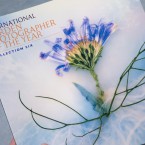
Pleased to recieve a copy of the International Garden Photographer of the Year Book (collection six) this week, with one of my images, the ‘Urban Forest’ in London.
Tags:Book, Greening the City, IGPOTY, International Garden Photographer of the Year, London Plane Trees, Urban Forest
This entry was posted on Friday, April 19th, 2013 at 20:42
You can follow any responses to this entry through the RSS 2.0 feed.
This year I have been lucky enough to have a single image selected in the final of the IGPOTY competition and have a portfolio commended. The exhibition will be on show at Kew Gardens from May 14th.
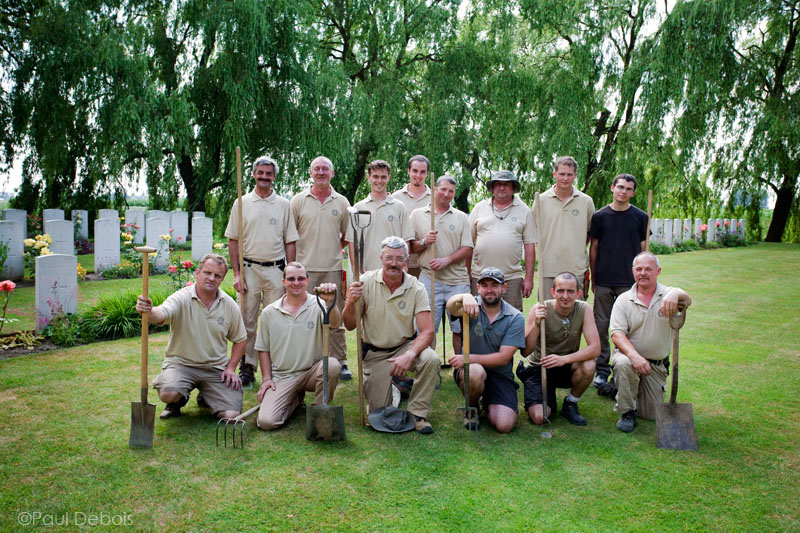
The single image is a portrait of a gardening team in the WW1 cemetery at Le Trou Aide Poste, near Lille, Northern France. This photograph is based on an image, taken around 1920, of a team of War Graves Commission gardeners. It is part of a story on the Fromelles Cemetery near Lille, opened in 2010 for the reburial of British and Australian WW1 soldiers, whose bodies were discovered in a mass grave in 2008. The gardeners still work in teams, and move around various cemeteries in a particular region. Many are second or third generation, and are related to the original gardeners, many of whom fought in WW1. Kneeling on the right is Jean-Pierre (Jimmy) Macdonald whose British grandfather fought in the war and who settled in France in the employ of the War Graves Commission. For more information and images see www.pauldebois.com and look at the Fromelles gallery.
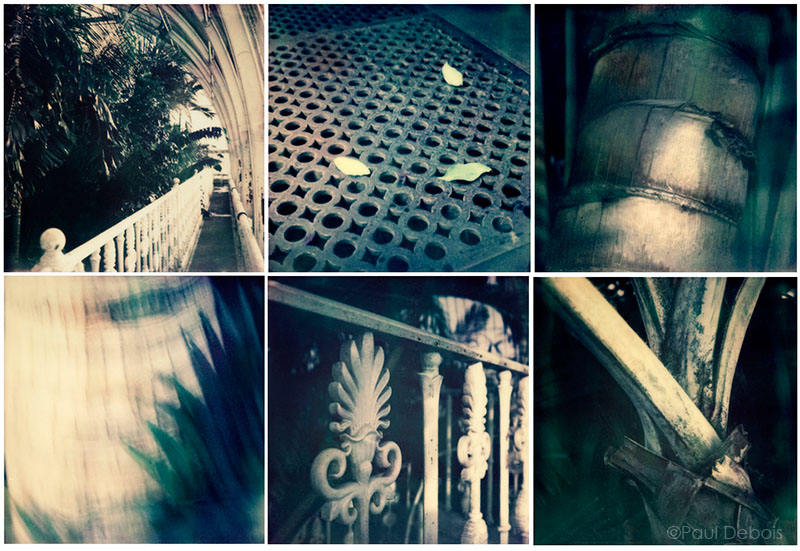
The Polaroid SX-70 portfolio was based on a photograph I took at Kew Gardens in 1982 as a photography student. Using the same camera, along with newly-released film I returned with the aim of capturing the atmosphere of this building, creating a ‘retro’ feel, with soft, almost monochromatic images. Polaroid SX-70 film was discontinued many years ago, but new film has been released, made by a company who bought what was left of the original Polaroid factory. This film has its own peculiar characteristics, but like the original Polaroid, produces very soft images – optically and tonally. The Palm House has lots of shade and I had to think in terms of black & white as the film could not render colour very well in these conditions. The photographs are not intended as literal portraits in the conventional sense.
The full size images can be seen in the previous posting ‘Shake it like a Polaroid picture‘.
Tags:Fromelles, IGPOTY, International Garden Photographer of the Year, Kew Gardens, photography exhibition, Polaroid, SX-70, War Graves Commission
This entry was posted on Tuesday, March 1st, 2011 at 20:34
You can follow any responses to this entry through the RSS 2.0 feed.
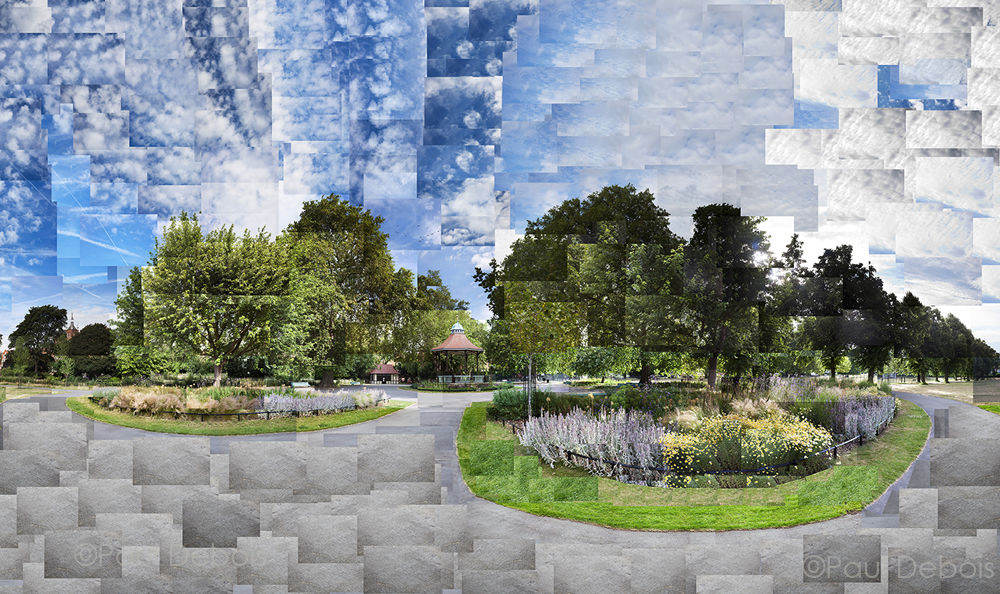
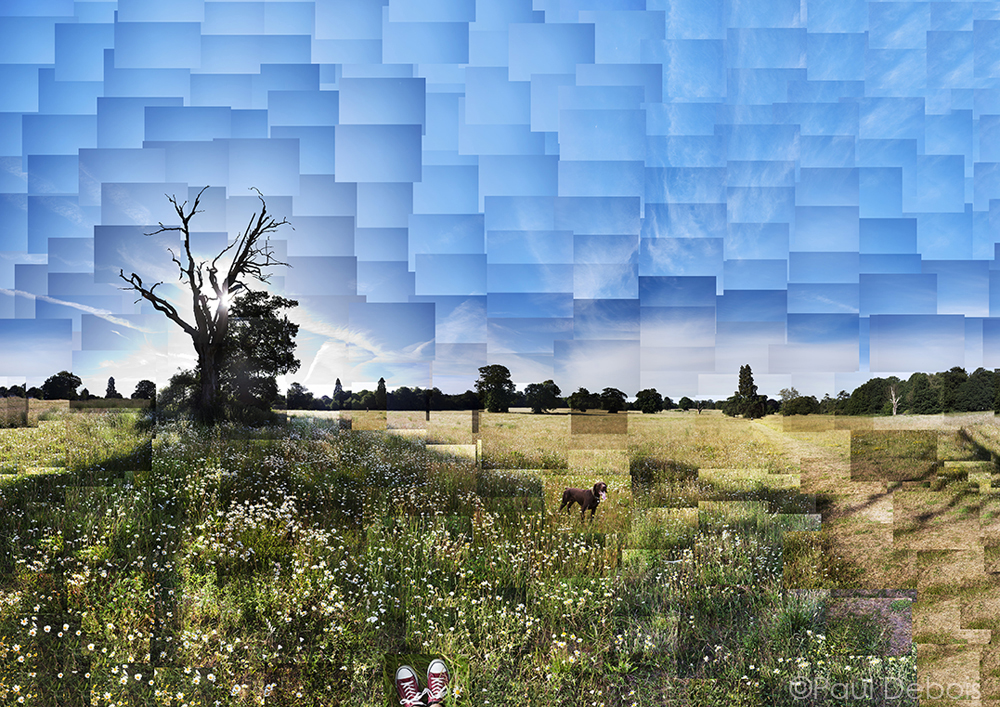
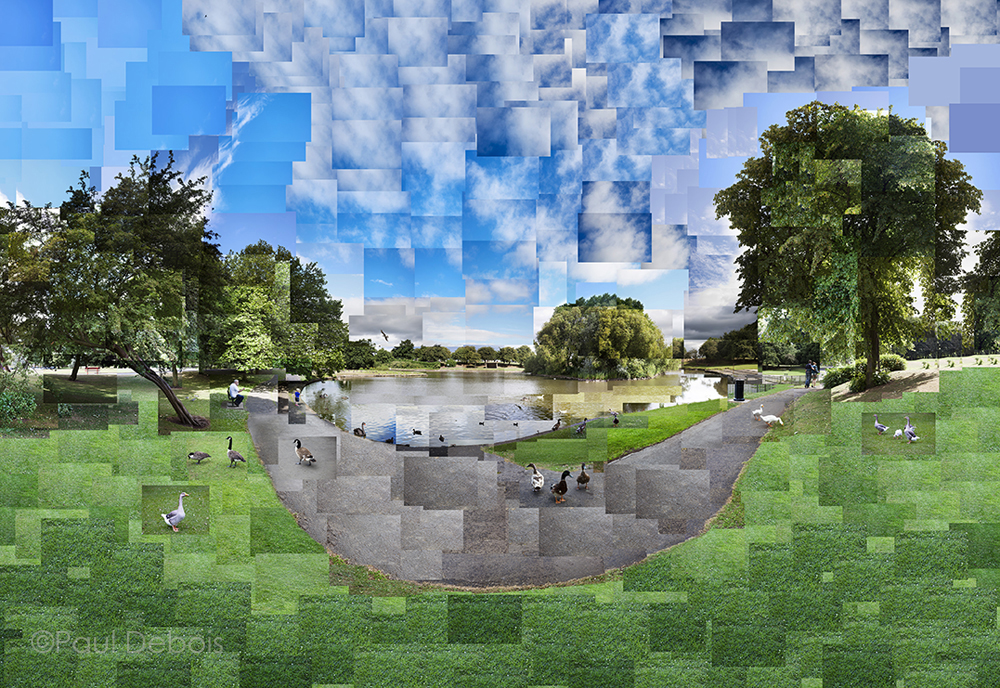
One of the unusual jobs I did last year was to produce three photo montages for SAGA, illustrating parks that had been restored using lottery grant money. Actually it was one of those jobs that was great fun to do because the brief was very open. I had free range over the interpretation, providing each image was identifiable with each of the respective sites. A rarity! The parks in question were Myatt’s Field in Lambeth, London, Catton Park near Norwich, and Sandall Park near Doncaster.
Due to the hot weather in early July 2010, the time scale for shooting was short. Grass was burning up and flower displays were quickly going over. So immediately after the press day of the Hampton Court Flower Show, I headed up to Norwich at the start of a long three day circular journey.
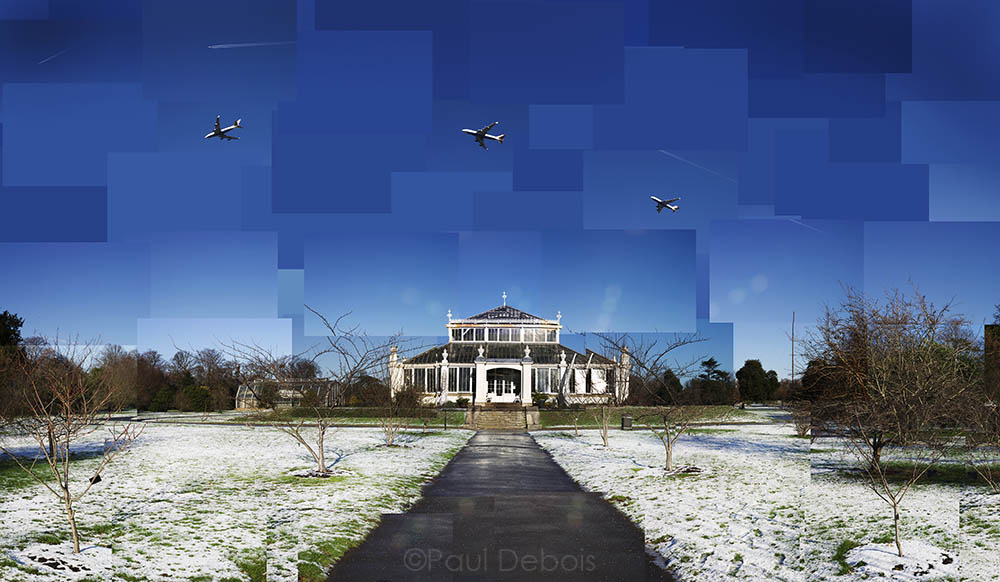
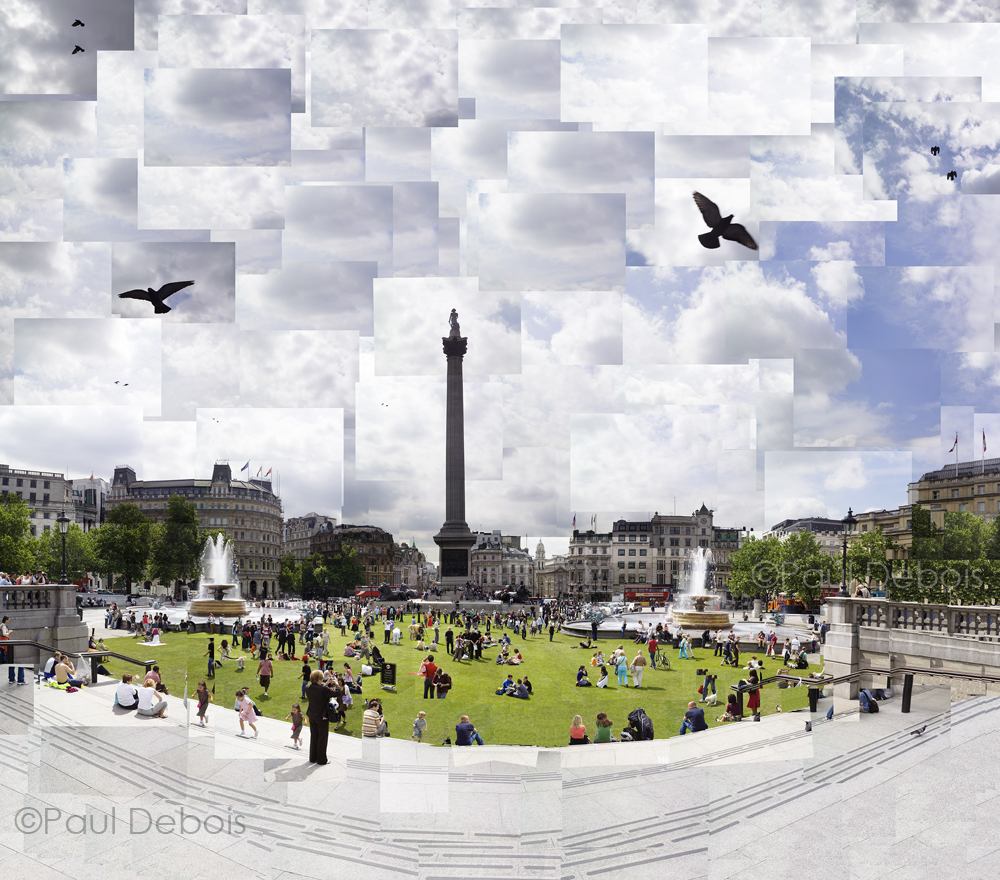
The ambient lighting or weather conditions are the same in any montage I have made – stable! It can be overcast, rainy or sunny. I don’t care. Anything but changeable. Ideally you want the same lighting from the first frame to the last, otherwise it makes it very difficult to join the images together once working on the computer. I now always shoot this type of image with a digital camera. The first ones I made whilst at college in the early 1980′s were obviously on film and were much smaller scale – they were rarely more than 20-30 individual photographs arranged together. The ones I now produce can have anything from 200 up to 600 individual frames. With this number, you have to have similar contrast and colour balance.
Even with 600 images, speed is still needed. The basic set will be produced in around 60 minutes, with maybe additional key shots taken immediately afterwards. I never use a tripod, as I’m not trying to get a symmetrical line of frames for a seamless join. Actually, human error is a key part. One small aberration at the left of the frame will have a knock on effect on the right and vice versa. But this is part of the adventure. It creates distortions – and the fact that the angle of views are often 240 degrees to 360 degrees, perspectives are deliberately false.
Underneath each image is a link which will reveal an animation in a new window, showing the construction of the photograph, from the first frame to last.
Myatt’s Fields - click to view animation
Catton Park – click to view animation
Sandall Park – click to view animation
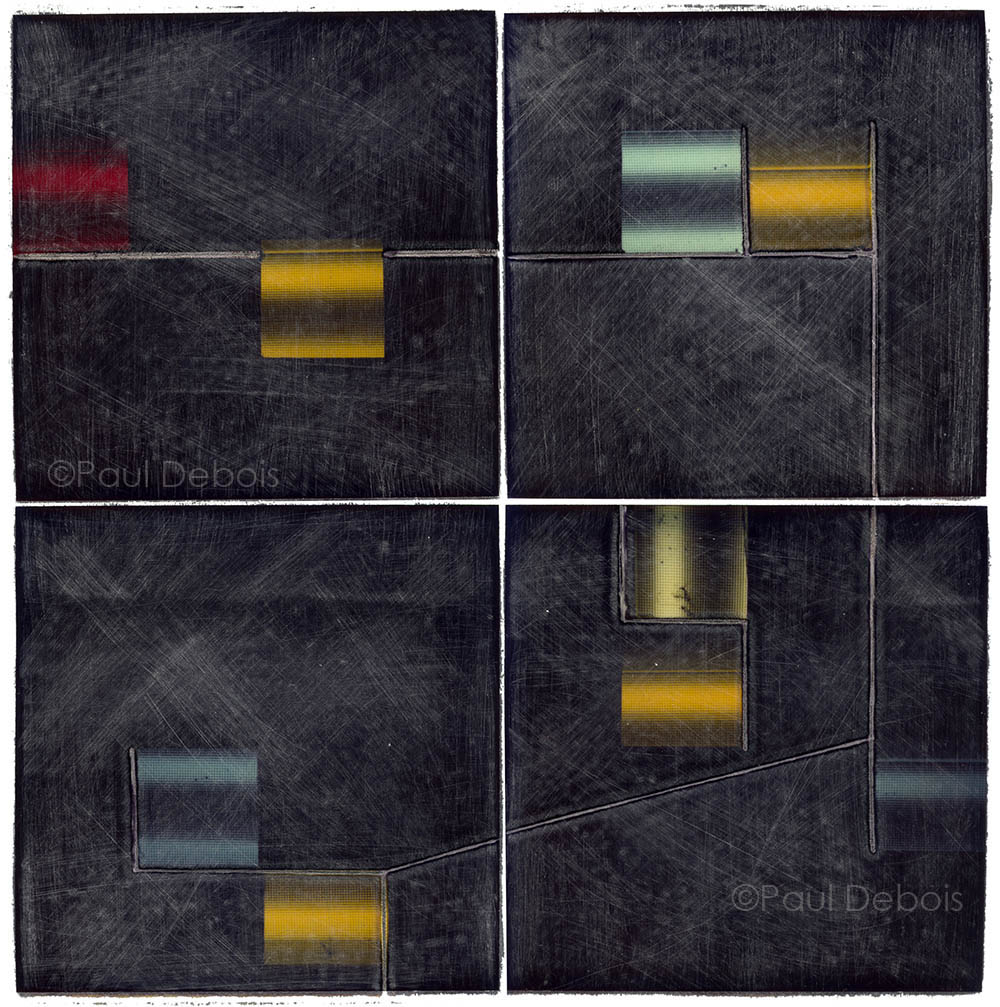
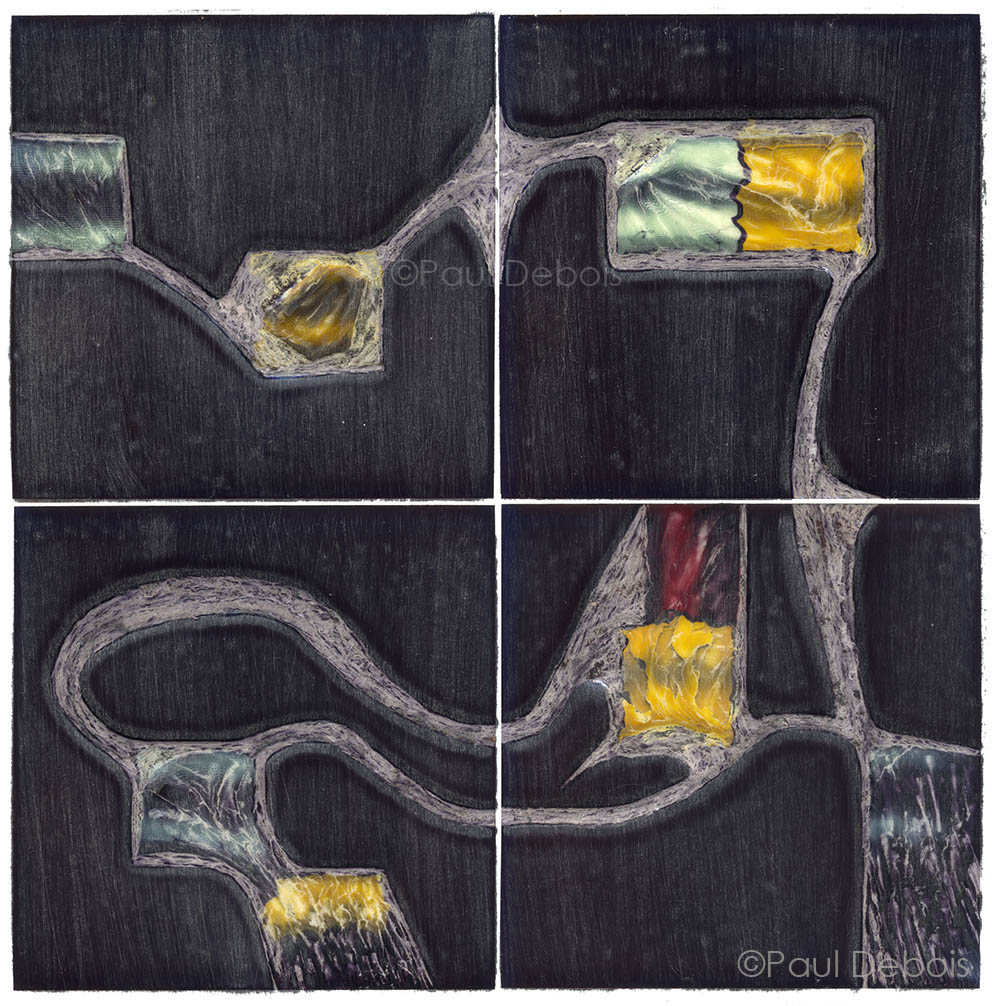
My first montages were made from SX-70 Polaroids. They were slightly easier to join up as the prints were produced instantly and you knew immediately whether you needed to shoot more frames to complete the set. The following are made up from only four shots each.
With these images, I scratched the surface with sand paper as an experiment to reduce the gloss finish. I even remember setting fire to some to see what distortion effects I could achieve. Not normal practice, and I remember as a sheepish 19 year old trying to explain what the burning smell was to my mother. For those who are curious, they smell like burning car tyres!
The following sequence is from more recent work.
Kew Montage 2 was in the New Views Exhibition at Kew Gardens in 2004. Trafalgar Square and M40 Junction 6 appeared in the Garden Photographer of the year exhibitions in 2007 and 2008 respectively.
The parks images can be seen in the March issue of SAGA Magazine.
Tags:Catton Park, IGPOTY, International Garden Photographer of the Year, joiner, Kew Gardens, montage, Myatt's Field, Polaroid SX-70, SAGA magazine, Sandall Park
This entry was posted on Sunday, January 9th, 2011 at 23:07
You can follow any responses to this entry through the RSS 2.0 feed.
For the last two years I have run various workshops on garden and flower photography, for both groups and individuals. On Sunday 2nd May this year, I teamed up with fellow Gardeners’ World photographer Jason Ingram, to host a course at the Royal Photographic Society in Bath.
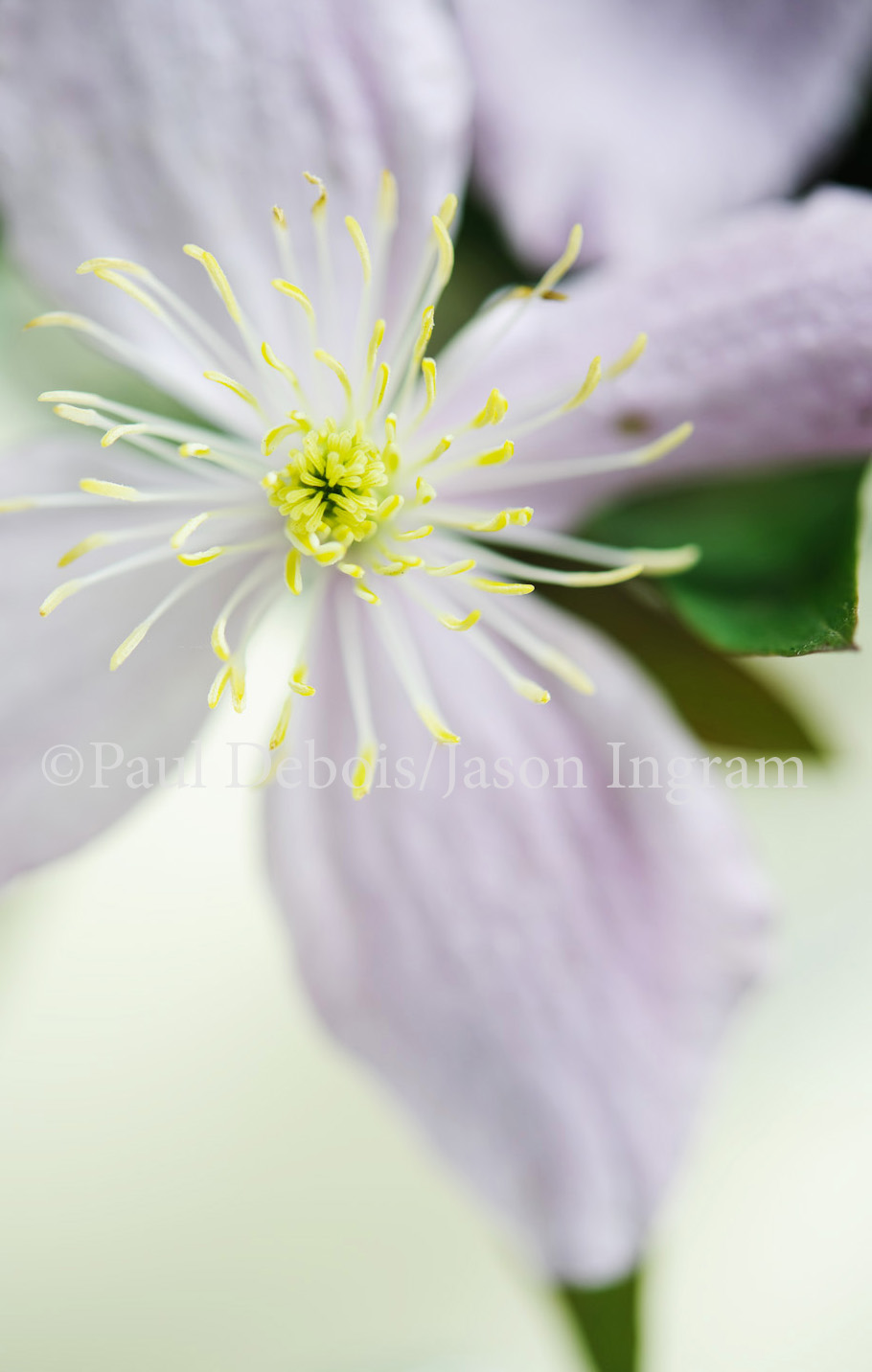
We wanted a friendly atmosphere, so kept the whole day very informal. We discussed the equipment we use, as well as sharing some of the tips and tricks used by garden photographers. In the afternoon we ran a practical session, using a still life, to demonstrate the maxim, “Keep it simple.” With just a fabric background and a home made reflector, we shot the photos you see here.
We also had a critique session, where we discussed the photographs brought to the course by the students. It was very interesting to see how Jason and I saw the images from different viewpoints and made different suggestions on how the work might be developed!
The feedback we got suggested that everyone attending the workshop enjoyed themselves and felt they had gained valuable experience. As a result, we will be taking another course on 26th September.
Tags:course, flower photography, IGPOTY, International Garden Photographer of the Year, plant and garden photography, Royal Photographic Society, RPS, tuition, workshop
This entry was posted on Tuesday, May 4th, 2010 at 21:33
You can follow any responses to this entry through the RSS 2.0 feed.
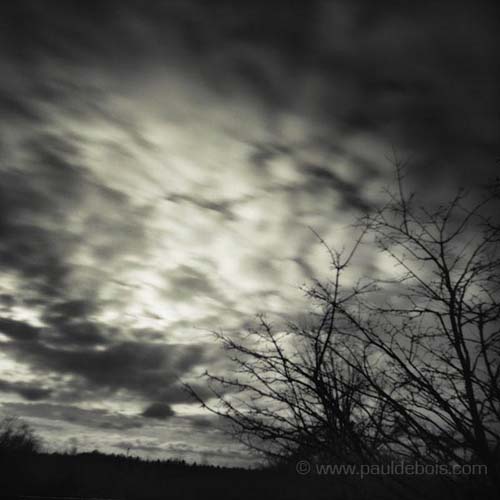
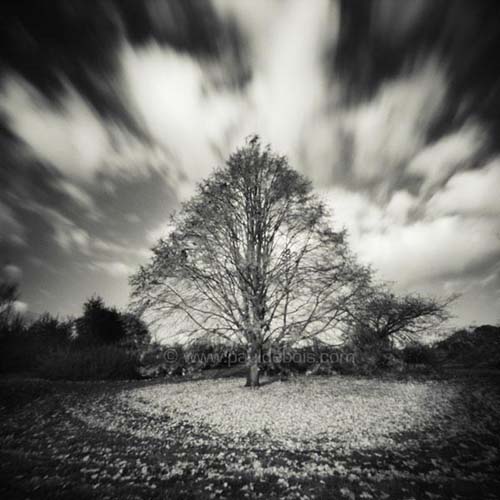
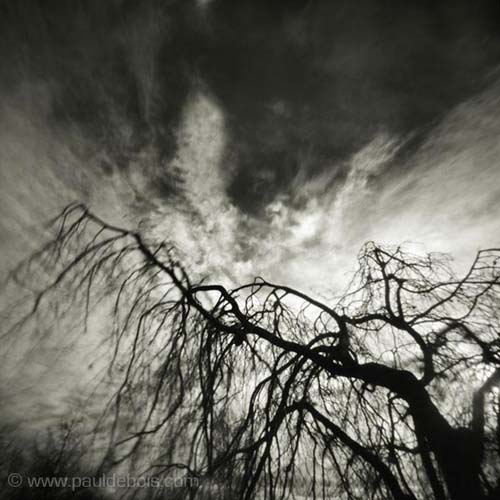
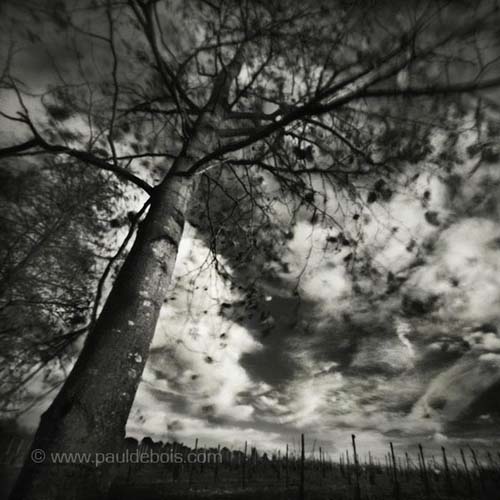
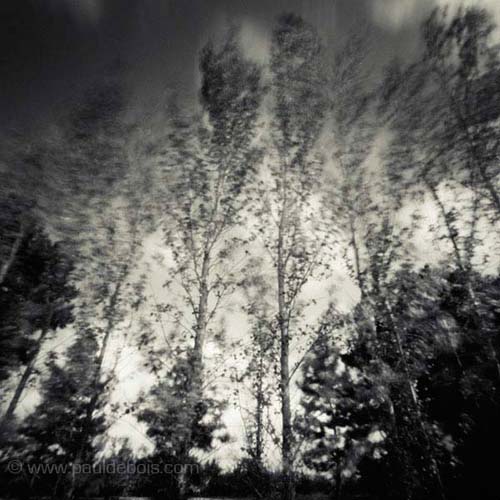
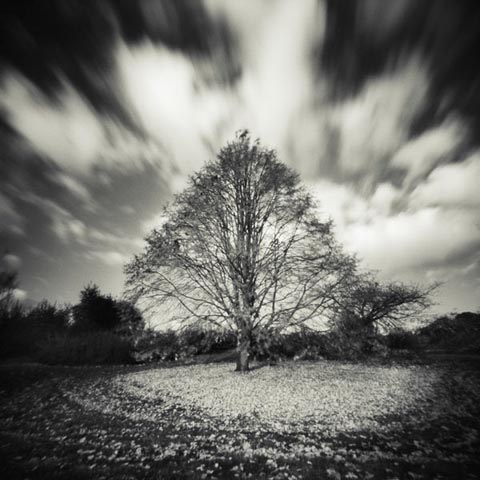
In November 2007 I started experimenting with film again, after a break of several years. More specifically, I was testing a pinhole camera. Digital had become very much the norm for commercial work and I just had a hunch about the effects that I could achieve using really simple equipment.
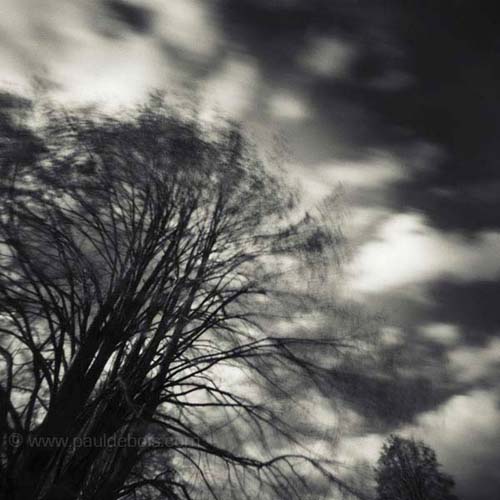
The black and white photographs I took at RHS Wisley through the winter of 2007 and 2008 evolved into a project I called ‘Pinhole Impressions’. They illustrate trees and the effect of wind as the leaves begin to fall. This series of images has just gone on show at Will’s Art Warehouse, London, as part of an exhibition called Vistas and Views. The work has been included with that of five other artists, who produce landscape work in various media – Nick Andrew – Nicole Etienne – Elaine Jones – Jonathan Pocock – Amanda Ralfe and Sarah Ross Thompson.
The two Tilia Tomentosa or Lime trees were the first taken in the series and have always been my favourites. I have been asked several times how difficult it was to blur the clouds in Photoshop. The answer is always met with disappointment when I say the images were shot in camera with no trickery – it was a genuinely windy day! The only enhancement is good old fashioned dodge and burn – but on my computer, not in the darkroom!
The Pinhole Impressions series, numbers One to Six, were previously exhibited in the International Garden Photographer of the year Exhibition at The Royal Botanic Gardens, Kew, in 2008 and at Wakehurst Place in 2009.
Will’s Art Warehouse - 180 Lower Richmond Road, Putney, London SW15 1LY England t: +44 (0)20 8246 4840
Tags:black and white, exhibition, International Garden Photographer of the Year, landscapes, monochrome, photography, pinhole, Pinhole Impressions, RHS Wisley, trees, Will's Art Warehouse, Wisley
This entry was posted on Monday, February 1st, 2010 at 21:41
You can follow any responses to this entry through the RSS 2.0 feed.